

ℹ In a Nutshell
Insight
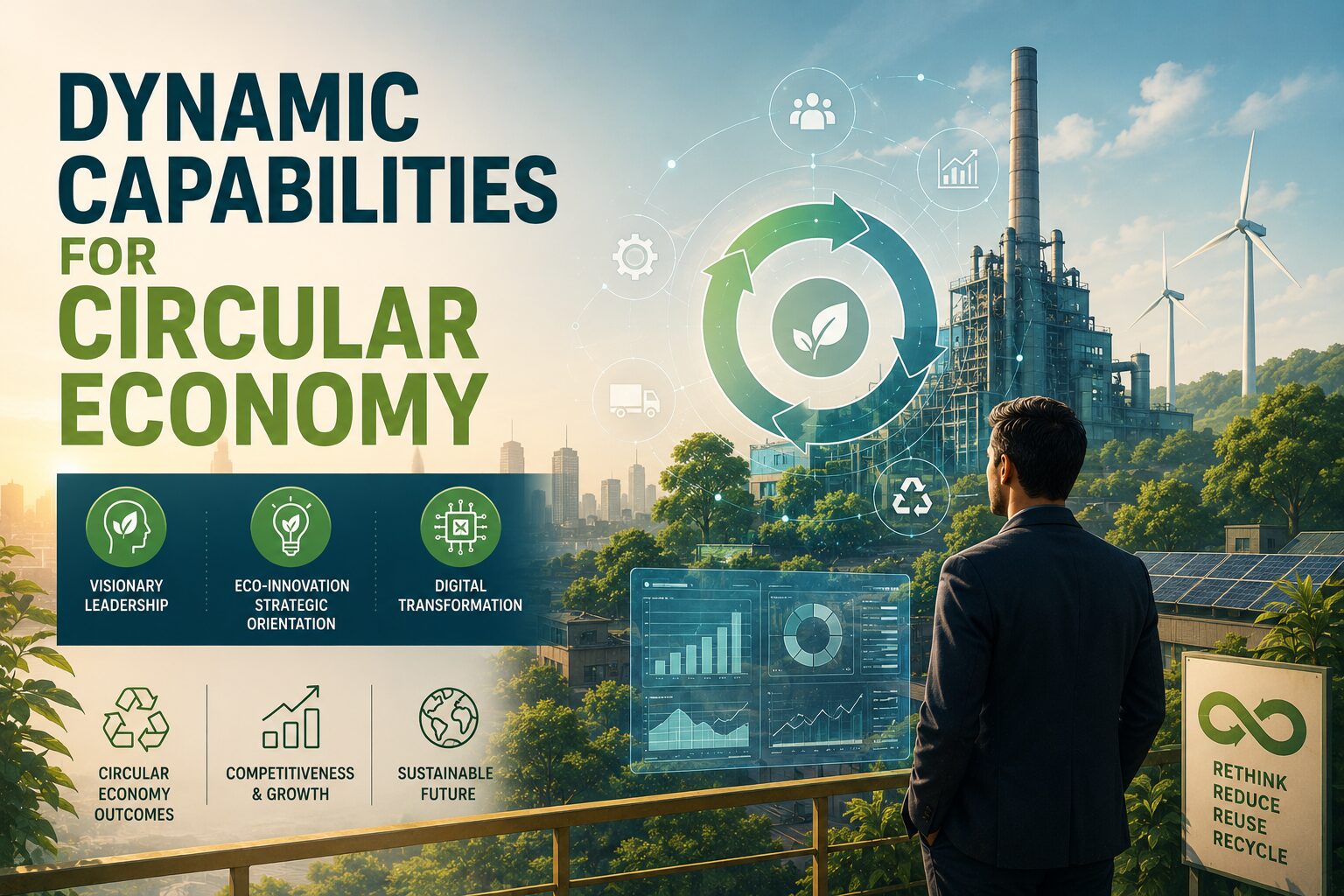
The adoption of circular economy practices in manufacturing sectors is influenced by internal capabilities such as visionary leadership, eco-innovation strategic orientation, and digital transformation.
Managerial Implication
Managers should focus on developing visionary leadership and eco-innovation strategic orientation to drive digital transformation and ultimately achieve circular economy outcomes.
Broader Relevance
The study's findings contribute to the United Nations' Sustainable Development Goals, particularly those related to industry, responsible consumption, and climate action.
Overview
The shift towards a circular economy is a pressing concern for businesses worldwide, but the journey is fraught with challenges, particularly in emerging markets like Pakistan’s manufacturing sector, where adopting circular economy practices is crucial for sustainability.
What This Research Is About
This study examines the role of internal capabilities in shaping the adoption of circular economy practices, focusing on three key levers: visionary leadership, eco-innovation strategic orientation, and digital transformation.
What the Study Found
The research found that:
- Visionary leadership drives digital initiatives forward.
- Eco-innovation strategic orientation has a stronger impact on circular economy outcomes.
- Digital transformation acts as a bridge between leadership, strategy, and circular economy outcomes.
- The effectiveness of digital transformation depends on an organization’s structural, technical, and cultural readiness.
What It Means in Practice
For managers, this means that developing visionary leadership and eco-innovation strategic orientation is crucial for driving digital transformation and achieving circular economy outcomes.
Why This Matters for Scholars
The study’s findings contribute to the dynamic capabilities theory and highlight the importance of internal capabilities in driving circular economy practices.
Final Takeaway
The study’s results emphasize the need for businesses to focus on developing internal capabilities to achieve circular economy outcomes and contribute to sustainable development.
📚 Original Article
Khan, A. N., Honglei, H., & Soomro, M. A. (2025). Dynamic Capabilities for Circular Economy: Leadership, Eco‐Innovation, and the Mediating Role of Digital Transformation. Business Strategy and the Environment, 35(3), 4484-4494. https://doi.org/10.1002/bse.70397
Comments are closed