


Insight
Traceability becomes more valuable when it is paired with trust, narrative, and fairer access to markets.
Managerial implication
Do not ask only whether your platform captures data. Ask who controls it, who benefits from it, and whether it improves the position of weaker actors.
Broader relevance
Although this case is in fisheries, the same logic can apply to agriculture, artisanal production, informal trade, and other sectors where producers face invisibility and weak bargaining power.
How a South African social enterprise used traceability, storytelling, and data ownership to improve sustainability and strengthen small-scale producers.
Digital transformation is often discussed as a matter of efficiency. This paper suggests something more important: digital innovation can also make markets fairer. Studying Abalobi, a South African social enterprise working with small-scale fishers, the authors show how digital tools can reduce information asymmetries and improve sustainability outcomes at the same time.
Why this matters
Small-scale producers are frequently excluded from premium markets not because they lack capability, but because they lack visibility, documentation, bargaining power, and access to market information. In sectors shaped by intermediaries and complex regulation, those information gaps become structural disadvantages.
Your Three things this case gets right
1. It turns traceability into value
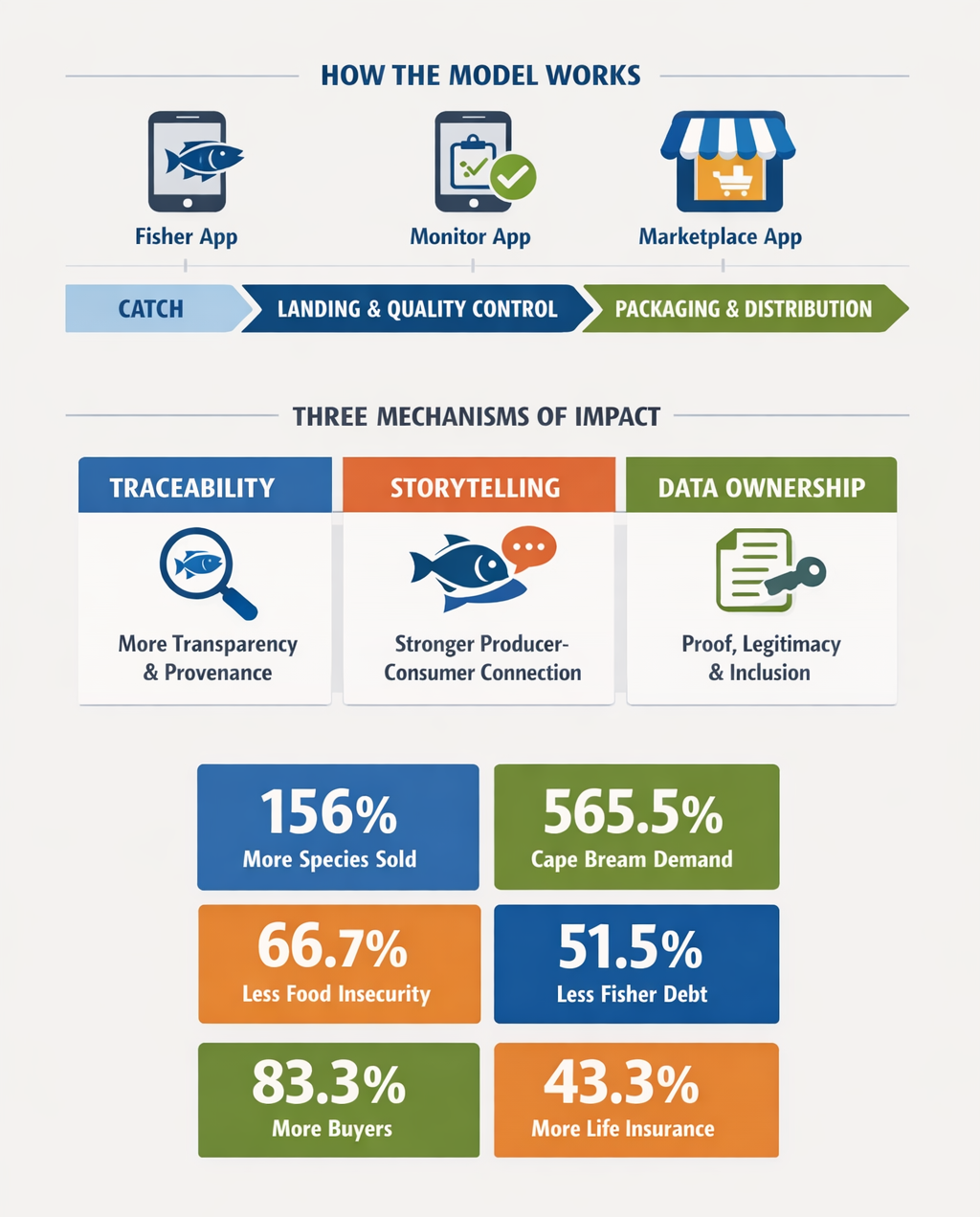
Abalobi built a digital system in which information moves with the product. Fishers record catch and activity data, monitors validate landings, and customers can access provenance information through QR codes. This makes the supply chain more transparent and more trustworthy.
2. It connects product and story
The innovation is not only technical. Abalobi also uses storytelling to help consumers understand where seafood comes from, who caught it, and why it matters. That changes the basis of competition. Products are no longer judged only by price, but also by authenticity, sustainability, and relationship.
3. It gives producers usable data
Perhaps the most powerful contribution is that fishers gain access to their own records. Those records help them show proof of activity, renew fishing rights, and demonstrate income when dealing with banks or regulators. In other words, digital tools become instruments of inclusion, not just transaction management.
What changed
The paper reports improvements in ecological, market, and livelihood indicators. Species diversity in the marketplace increased, sustainable species gained share, demand for Cape Bream rose sharply, the buyer base expanded, debt fell, and food insecurity dropped. These changes suggest that digital innovation can create redistributive value when it is combined with fair pricing, direct market access, and strong relational design.
Final takeaway
The main lesson for managers is clear: digital innovation creates deeper impact when it helps weaker actors become visible, credible, and connected. In that sense, transparency, storytelling, and data ownership are not side features. They are strategic levers for building more inclusive and sustainable markets.
Comments are closed